
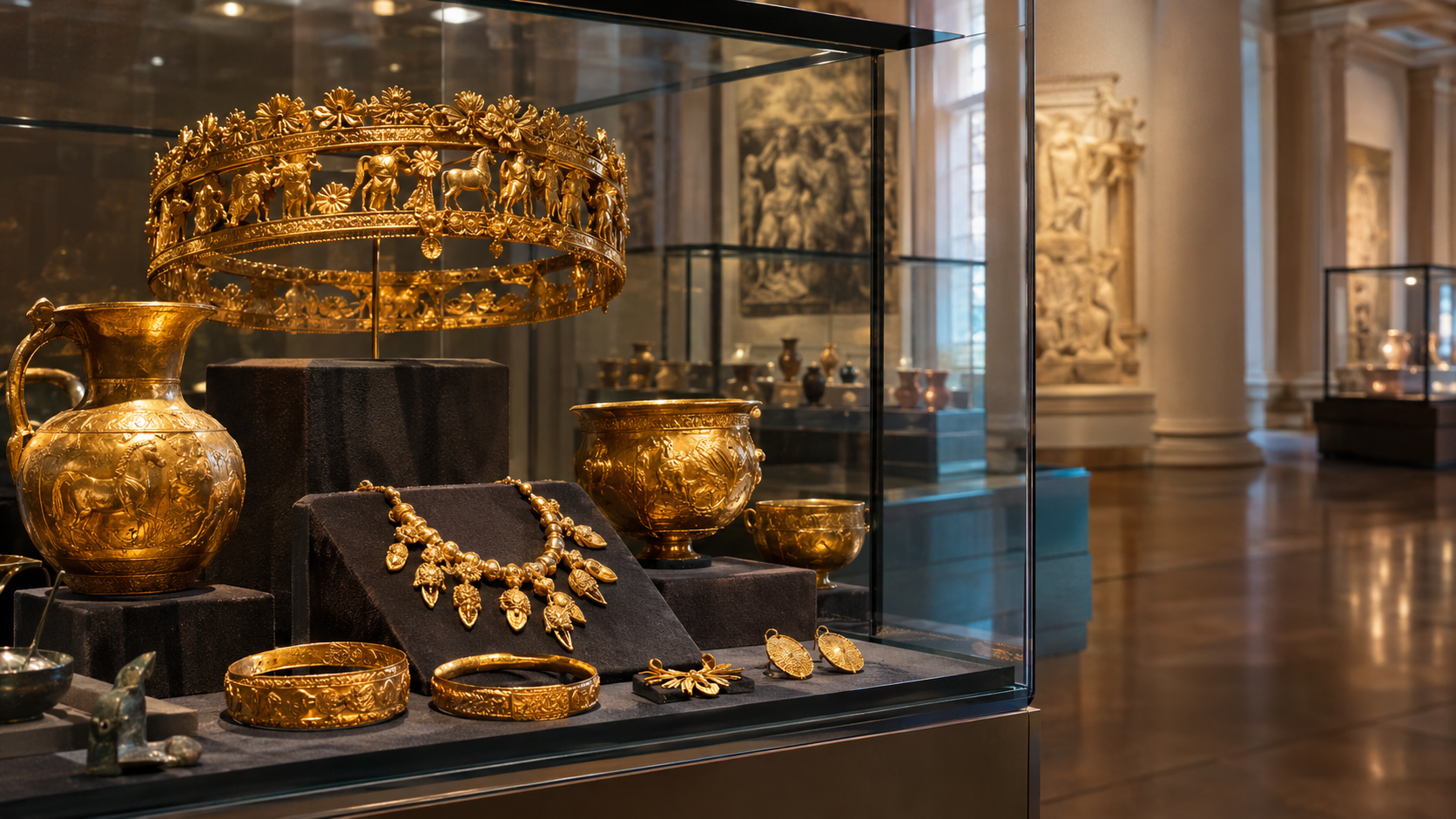
Discover Trojan Gold First Exhibited Public 1996 Moscow
I have long been fascinated by ancient mysteries. Few stories capture the imagination like treasures linked to Heinrich Schliemann.
For decades, these precious items stayed hidden, fueling rumors and academic debates. Everything changed when the collection was finally revealed during a landmark event.
The trojan gold first exhibited public 1996 moscow marked a major turning point in history. This display brought long-lost artifacts into public view and sparked interest worldwide.
I want to trace these pieces through the chaos of war and quiet museum halls. We will examine the disputed ownership and questions surrounding these beautiful relics today. Join me to uncover the truth behind this incredible discovery.
What Happened When the Trojan Gold First Exhibited Public 1996 Moscow
Entering the Pushkin State Museum in 1996 felt like stepping into a lost chapter of history. After decades of silence, the 1996 Moscow exhibition brought the legendary Trojan gold into public view. It captivated historians and visitors alike.
The 1996 Moscow Exhibition That Ended Decades of Secrecy
How the Pushkin State Museum of Fine Arts Presented the Treasure
Curators worked hard to create an ancient artifacts display that respected the find’s importance. They placed the items in secure, climate-controlled cases, letting visitors study their fine work up close. This scholarly, inspiring presentation began a new era for historical museum exhibits.
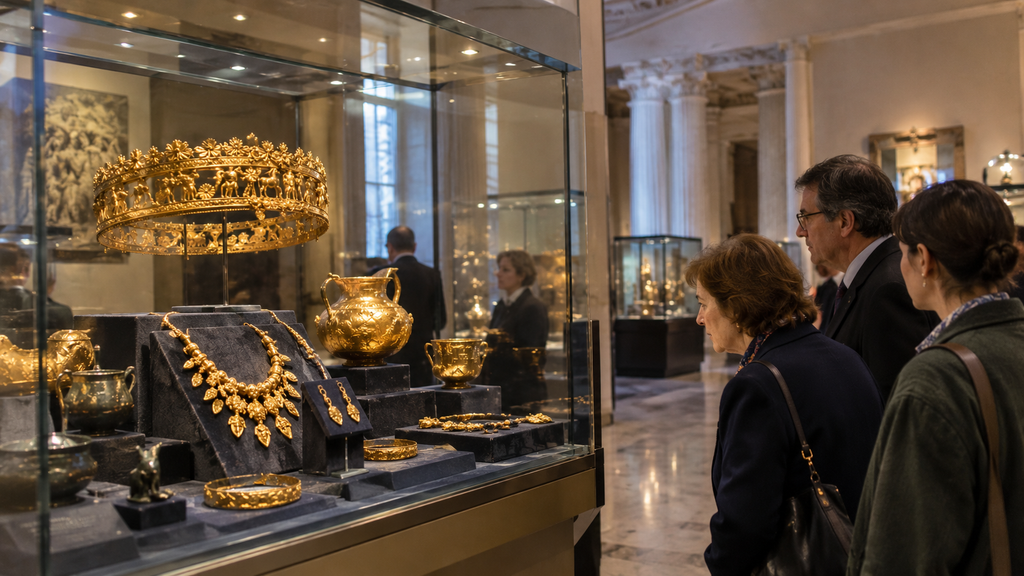
The sudden appearance of these items caused a worldwide sensation. Missing since the end of World War II, the collection’s return to Moscow became a major diplomatic and cultural event. Journalists worldwide visited the 1996 Moscow exhibition to see the treasure themselves.
The Objects Commonly Identified as Priam’s Treasure
Gold Jewelry, Vessels, Weapons, and Other Ancient Artifacts
The collection is vast, with hundreds of pieces showing the wealth of an ancient civilization. Visitors especially admired the delicate gold jewelry and heavy, ornate vessels. The ancient artifacts display reveals detail that remains breathtaking by modern standards.
| Artifact Category | Material | Primary Use |
|---|---|---|
| Gold Jewelry | Pure Gold | Ceremonial Adornment |
| Vessels | Gold and Silver | Ritualistic Offering |
| Weapons | Bronze and Copper | Defense and Status |
The Connection to Heinrich Schliemann’s Excavations at Troy
The history of these items is inseparable from Heinrich Schliemann’s work. He famously claimed to have found the hoard at Troy in the 1870s, linking the gold to Homer’s epic tales. Modern scholars debate his methods, but his discovery remains among the world’s most famous historical museum exhibits.
Where the Gold Came From and How It Reached Moscow
The journey of these ancient civilization artifacts fascinates me as much as the gold. Before reaching the Soviet Union, they passed through centuries of myths and decades of political conflict.
Troy, Schliemann, and the Discovery of the Treasure
What Archaeologists Know About the Ancient City of Troy
Archaeologists recognize Troy as a site of great historical importance in modern-day Turkey. Many civilizations built the city over the ruins of earlier ones.
How Schliemann’s Excavations Shaped the Treasure’s Public Identity
Heinrich Schliemann’s 19th-century excavations brought the gold treasures from trojan era to the world stage. He famously claimed to have found King Priam’s jewels, capturing public interest at once.
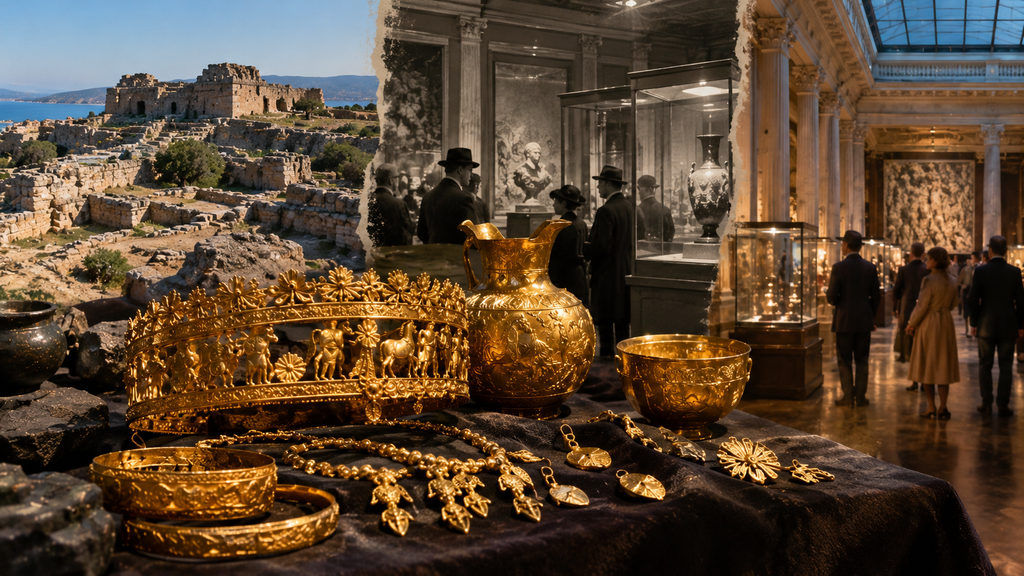
The Journey From Berlin to the Soviet Union
The Impact of World War II on the Trojan Collection
During World War II, the collection moved from Berlin to protect it from destruction. Shifting battle lines then caused these items to disappear for many years.
How the Artifacts Entered Soviet Museum Collections
Soviet forces eventually secured the collection as war reparations. They moved the items to Moscow, where secure storage hid them for decades.
Why the Collection Remained Out of Public View
Political Secrecy and Conflicting Ownership Claims
For years, the public display of historical artifacts remained impossible because of political tensions. Germany and Russia disagreed about the treasure’s legal status.
| Era | Location | Status |
|---|---|---|
| 1870s | Troy/Berlin | Publicly Exhibited |
| 1945 | Soviet Union | Hidden/Secret |
| 1996 | Moscow | Publicly Exhibited |
Distinguishing Historical Evidence From Popular Legends
We must separate Schliemann’s romantic stories from the archaeological record. The gold treasures from trojan era are authentic, but scholars still debate their link to Homeric figures.
- Historical Fact: The items are genuine Bronze Age artifacts.
- Popular Legend: The direct link to King Priam is largely speculative.
- Current Status: The items serve as a bridge between cultural memory and modern research.
This complex history helps me understand the importance of the eventual public display of historical artifacts in 1996. It ended a long silence for these precious ancient civilization artifacts.
Inside the 1996 Moscow Trojan Gold Showcase
In 1996, entering the Pushkin Museum felt like stepping into Homer’s epics. The collection had stayed hidden behind mystery for half a century. These ancient history showcases connected modern viewers with Troy’s legendary world.
What Visitors Could See in the Ancient Artifacts Display
Gold Treasures From the Trojan Era and Their Visual Impact
The gold’s brilliance was the first thing that caught my eye. Each piece, from delicate diadems to heavy pendants, shimmered beneath carefully calibrated gallery lights. This visual impact made the room feel ancient, making the trojan gold exhibit details. seem tangible and immediate.
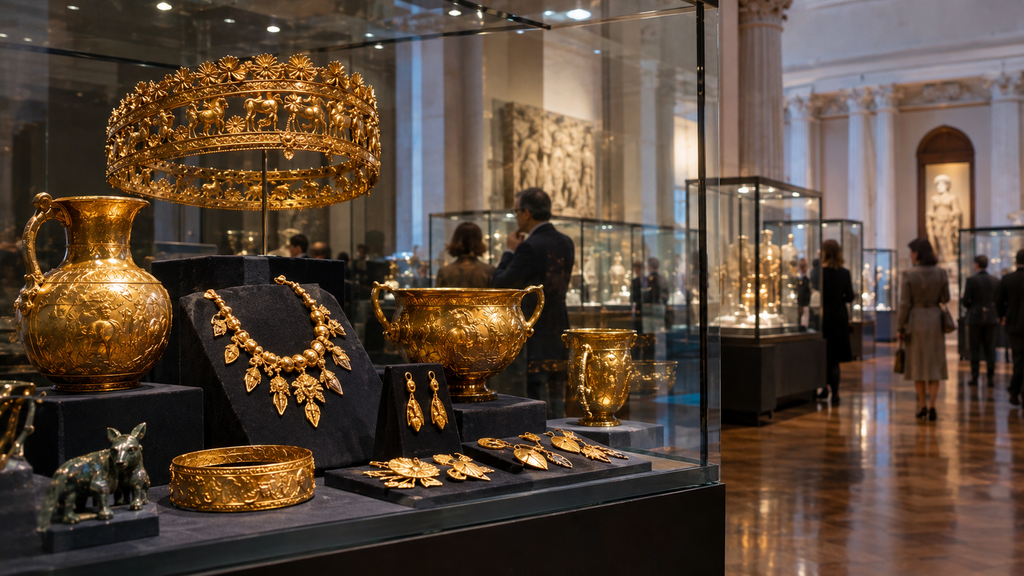
I saw that the curators worked hard to explain more than the gold’s monetary value. Detailed labels described Hisarlik’s archaeological layers and the finds’ cultural setting. These descriptions connected raw treasure with historical evidence.
The Exhibition’s Role in Historical Museum Exhibits
How Curators Balanced Archaeology, National History, and Public Interest
The exhibition challenged museum staff to balance several goals. They presented the items as important archaeological finds while explaining their complex arrival in Russia. This ancient artifacts exhibition. satisfied academic curiosity and the public’s love of spectacle.
Why the Display Was More Than a Collection of Valuable Objects
Beyond the gold, the display became a strong symbol of cultural memory. It raised questions about heritage ownership and the ethics of wartime displacement. The objects became narrative tools that told a survival story through the twentieth century.
The People and Institutions Connected to the Exhibition
The Pushkin Museum’s Role in Making the Collection Public
The Pushkin Museum took a bold step by opening these vaults to the world. By hosting the collection, it strengthened its reputation as a guardian of global treasures. This commitment to transparency marked a pivotal moment for international museum standards.
The Involvement of Russian Cultural Authorities and International Observers
Russian cultural authorities worked with international experts to protect the items and confirm their authenticity. This partnership supported the event’s credibility. It showed that, despite diplomatic tension, the shared language of history could unite diverse groups.
Reactions, Ownership Disputes, and the Exhibition’s Consequences
When the doors opened, the long-hidden treasure drew awe and intense political scrutiny. This historical treasures display attracted thousands of curious visitors to Moscow.
How Russian Audiences and International Visitors Responded
Public Fascination With a Long-Hidden Ancient History Showcase
For many, the exhibition offered a rare glimpse into a mythic past hidden for decades. I observed how the gold’s beauty and craft captivated visitors, like stepping into Homer’s epics.
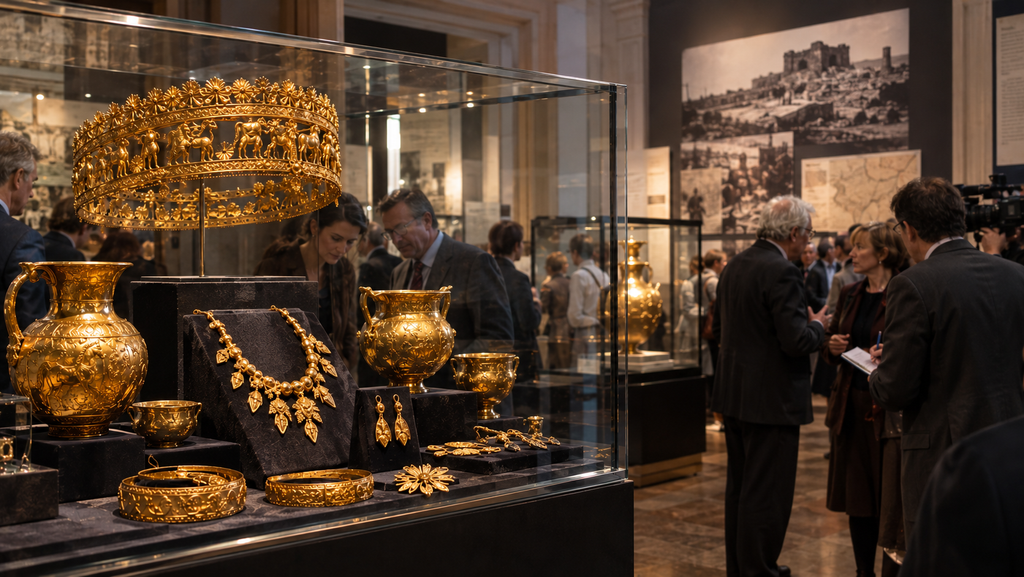
The global press quickly came to the city, making this ancient greek archaeology showcase a major news event. Journalists debated the display’s ethics and its link to wartime looting. They often highlighted the conflict between cultural appreciation and that dark history.
“The gold of Troy is not merely a collection of objects; it is a mirror reflecting the complex and often painful history of the twentieth century.”
Why Germany and Other Claimants Challenged the Display
The Argument That the Treasure Was Removed From Berlin After World War II
Germany said the collection was legally held in Berlin before the war and should be returned. It argued that Soviet forces illegally seized the items as cultural property.
Russia’s Position on Wartime Cultural Property
Russian officials viewed the items as legitimate compensation for the immense destruction caused by the conflict. They said the artifacts were saved from ruin and therefore belonged in their current repository.
How the Exhibition Changed the Conversation About Repatriation
The Difference Between Museum Access and Legal Ownership
The exhibition separated the right to view history from the legal title to own it. The public gained access, but the items’ legal status remained deeply contested.
| Perspective | Primary Argument | Goal |
|---|---|---|
| Germany | Pre-war ownership | Repatriation |
| Russia | Wartime compensation | Retention |
| Public | Cultural access | Education |
Why the Dispute Still Matters for Ancient Artifacts Exhibition Policies
This historical treasures display still influences how museums handle contested items today. It reminds us that every ancient greek archaeology showcase carries history, politics, and the art world’s ongoing quest for justice.
Why the Moscow Display Still Fascinates Visitors Today
The 1996 exhibition still captivates audiences decades later. Brilliant artifacts and their mysterious disappearance create a story that remains hard to ignore. These objects matter because of the stories people attach to ancient metal.
The Enduring Power of Gold, Myth, and Archaeological Discovery
When I consider the museum exhibit trojan gold, I see a bridge between modern curiosity and ancient legend. The gold’s weight links us to Homer’s world and makes his epic tales feel real.
How Homer’s Troy Shapes Modern Responses to the Collection
Homer’s epic poetry helps us interpret these findings. Visitors still connect the jewelry with legendary figures from the Trojan War. This mythological lens turns archaeological finds into icons of human history.
Why Ancient Greek Archaeology Showcases Attract Broad Audiences
People naturally admire the beauty of ancient craftsmanship. These displays reveal a vanished civilization and inspire wonder among scholars and casual visitors. The collection’s visual impact is truly unmatched in archaeology.
What the Treasure Reveals About Museums and Cultural Memory
How we display history reveals our present values as well as the past. A russian museum trojan gold exhibition reflects national identity and ownership politics. It asks who truly owns humanity’s heritage.
The Tension Between Preservation, Access, and National Identity
Museums must balance public access with preservation. Geopolitical disputes make this challenge more serious. The struggle shows the fragile nature of cultural memory in a globalized world.
How Historical Treasures Displayed in Museums Acquire New Meanings
Objects gain new meanings based on their location and presentation. Jewelry made for a queen may become a symbol of diplomatic leverage or national pride. This changing meaning is central to the museum experience.
What to Look For When Reading About the Trojan Gold Today
Understanding this collection’s history requires careful attention to detail. Verify sources when reading about the russian museum trojan gold exhibition. Reports may confuse readers, so track the timeline carefully.
Checking Dates, Museum Names, and Claims About the Collection
Cross-reference display dates with official museum records. Misinformation can spread easily, especially about the items’ provenance. The table below can help you identify key historical milestones.
| Event Type | Primary Focus | Historical Context |
|---|---|---|
| 1996 Exhibition | Public Revelation | Post-Soviet Transparency |
| Provenance Research | Ownership Claims | International Diplomacy |
| Modern Analysis | Material Science | Archaeological Integrity |
Separating the 1996 Public Display From Later Exhibitions and Reports
Separate the first 1996 event from later studies and temporary loans. Each stage of the collection’s public life has different effects on international law and cultural heritage. Staying informed helps you understand the complex journey of these ancient treasures.
You May Also Read: CNLawBlog
Conclusion
These ancient artifacts remind us that history is never truly settled. The 1996 moscow trojan gold showcase turned a hidden collection into a global conversation. It made the world face the complex journey of objects taken from Berlin to the Soviet Union.
I believe the trojan gold historical significance reaches beyond the beauty of the metal. It reflects Heinrich Schliemann’s ambition, the tragedy of war, and the continuing struggle over cultural ownership. These objects carry Troy’s weight and the scars of twentieth-century politics.
My exploration of this topic shows why careful museum research remains vital today. When artifacts hold deep emotional and political meaning, we must handle them with transparency.
I hope the 1996 moscow trojan gold showcase encourages you to question the origins of gallery treasures. Understanding the trojan gold historical significance helps preserve our shared human memory for future generations.
FAQ
When and where was the Trojan gold first shown to the public after World War II?
The Trojan gold was first shown publicly at a 1996 Moscow event. After more than fifty years in secret storage, the Pushkin State Museum of Fine Arts opened its doors. It let the world see legendary “Priam’s Treasure” after it vanished from Berlin at World War II’s end.
What specific items were included in this ancient artifacts display?
The ancient artifacts exhibition featured incredible Trojan-era treasures, including the famous “Great Diadem,” necklaces, earrings, gold vessels, and bronze weapons. Heinrich Schliemann unearthed these ancient civilization artifacts in the 1870s. They remain central to any ancient Greek archaeology showcase.
Why did it take so long for a public display of historical artifacts from Troy to happen in Russia?
Political secrecy and the Cold War played a major role. The Soviet Union did not officially admit having the treasure until the early 1990s. The 1996 Moscow Trojan gold showcase followed Russia’s decision to discuss “trophy art” taken from Germany during World War II.
What is the trojan gold historical significance regarding Schliemann’s discovery?
Its significance has two parts. It linked the gold to Homer’s *Iliad*, although later archaeology placed it before the Trojan War. The Russian museum Trojan gold exhibition also exposed 19th-century archaeology’s difficult ethics: Heinrich Schliemann smuggled it from the Ottoman Empire.
How did the international community react to the historical treasures display in 1996?
The reaction mixed awe with intense legal debate. Visitors were mesmerized by the ancient history showcases, while the German government and Berlin State Museums renewed repatriation calls. The event sparked global debate over ownership of cultural heritage moved during wartime.
Where can I find more trojan gold exhibit details today?
For more information, explore the official archives of the Pushkin State Museum of Fine Arts in Moscow. They record the 1996 Moscow exhibition and explain how these ancient civilization artifacts are preserved today. It remains one of the most studied and controversial collections in ancient history showcases.